
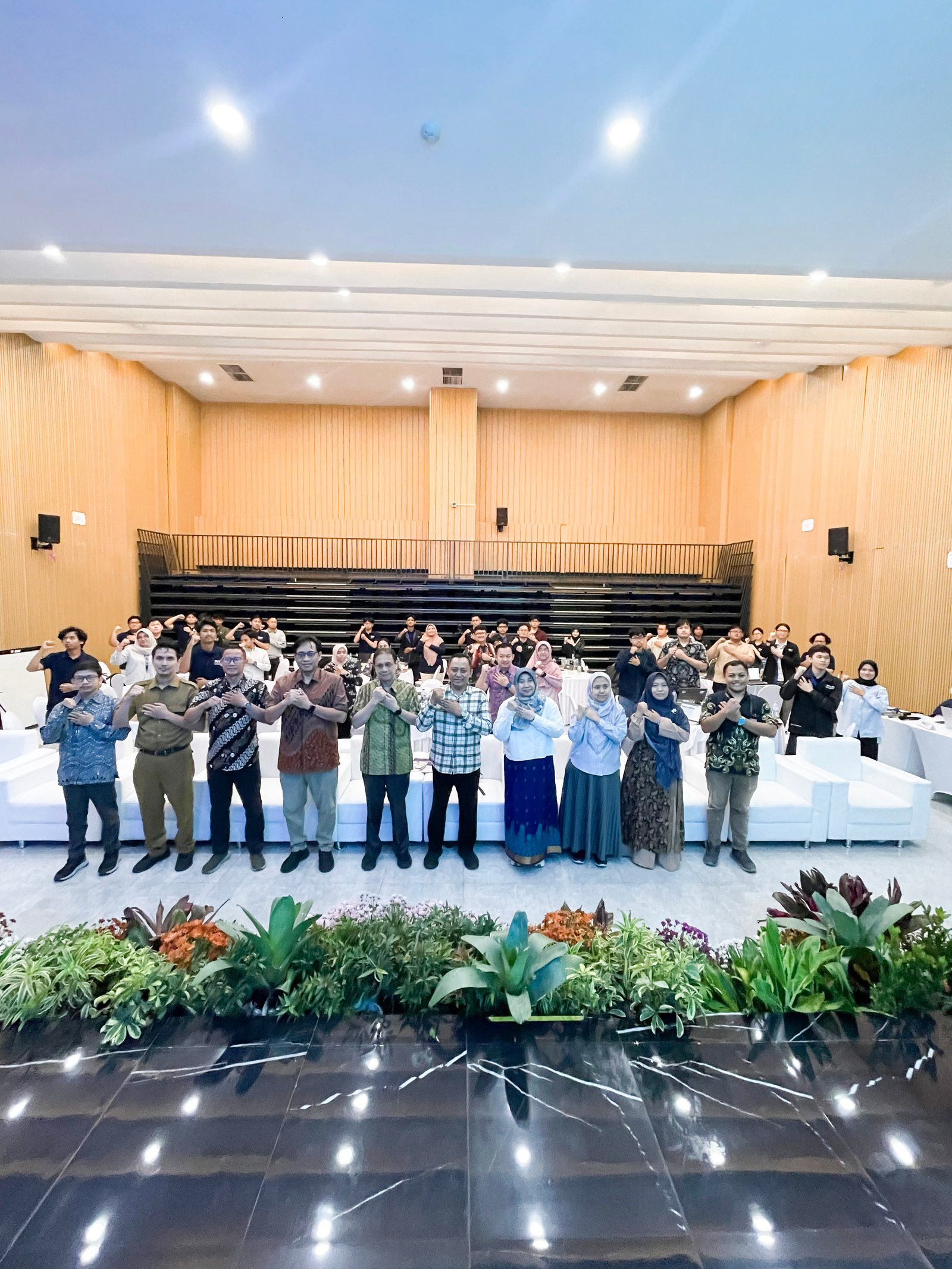
SURABAYA, June 10, 2026 – The Ministry of Communication and Digital (Komdigi) continues to accelerate its efforts to create a safe and healthy digital space for the Indonesian public. In collaboration with the Institut Teknologi Sepuluh Nopember (ITS), Komdigi successfully held Workshop 3 of the Artificial Intelligence Talent Factory (AITF) Program on June 9–10, 2026, at the ITS campus in Surabaya.
The event was officially opened by the Dean of the Faculty of Intelligent Electrical and Informatics Technology (FTEIC) of ITS, Prof. Diana Purwitasari, alongside the Head of the Digital Talent Development Center of Komdigi, Dr. Said Mirza Pahlevi, M.Eng. This workshop served as a crucial momentum for 40 selected students to integrate the AI models they had developed into fully functional, ready-to-use systems (Minimum Viable Products/MVP).
Two Smart Innovations: Negative Content Detection and Child Protection
Over the two days, the main focus of the activity was directed toward refining two AI-based use cases that are highly relevant to current digital challenges:
-
Disinformation, Slander, and Hate Speech (DFK) Monitoring System: The student team demonstrated an AI-powered digital space monitoring dashboard capable of automatically detecting and analyzing hoax content and hate speech across various social media platforms. The system is also equipped with a verification feature and is aligned with current regulations.
-
Digital Child Protection (PAD) System: A content screening innovation designed specifically to assist parents and the general public. Through smart text and visual analysis, this system can classify the risk level of digital content and ensure age appropriateness, protecting children from exposure to harmful materials.
Direct Validation to Ensure Accurate and Applicable Systems
To ensure these smart systems not only operate theoretically but are also robust in practice, the Director of Digital Space Control of Komdigi, Safriansyah Yanwar Rosyadi, and his team were present to provide direct review and validation.
The feedback focused on improving detection accuracy, simplifying the user interface workflow (UI/UX), and refining the AI's decision-making logic. One of the critical efforts carried out on the second day was minimizing the hallucination phenomenon in AI models, ensuring that the analytical output generated by the system remains valid and not misleading.
With intensive guidance from lecturers, mentors, and the Komdigi technical team, all these systems are continuously being perfected. The technological innovations born from ITS's young talents are expected to reach the finalization stage soon, so they can be implemented effectively to support digital space monitoring and child protection in Indonesia